





Recent post
Categories
Tags

Imagine investing billions into building world-class hotels and attractions, training staff, and creating a paradise for visitors. And then... you hand over the only set of keys to the front door to an external tech company on another continent.
Sounds absurd? Yet, this is the reality for many tourism markets today that rely 100% on global booking platforms.
A year ago in Turkey, I experienced firsthand what happens when that external "keyholder" suddenly locks the door. It was a brutal lesson in digital dependency. In this article, I explain why destinations like Jordan and Saudi Arabia must reclaim the "digital keys" to their own markets and why building an independent distribution channel is the only path to true security.
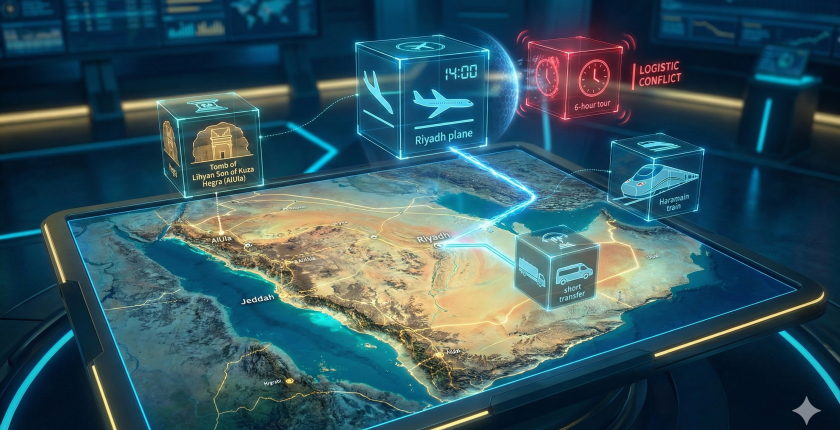
Anyone who has ever manually crafted a complex touring itinerary for a demanding client knows the feeling. It is not a simple sale. It is akin to performing surgery on a living organism, resembling a high-stakes 3D puzzle where a single wrong move triggers a domino effect.
All it takes is for a client to change an arrival time, and the intricate logistical structure of the next three days collapses like a house of cards. Traditional booking systems are incapable of foreseeing this—they see only prices and availability, blind to the consequences.
So, how do we transfer decades of on-the-ground expert experience into the digital realm? Can a machine truly learn "destination logic"?
In the article below, I break down the critical difference between a simple "service catalog" and a true itinerary creator, explaining how modern IT systems are attempting to embed the inherent knowledge of a DMC directly into their algorithms.

In the era of Big Data, selling luxury travel is no longer the art of persuading the unpersuaded. It is the science of detecting signals. The key to success in a new market like Saudi Arabia is not "mass reach," but precise "Client Scoring." Here is how PolandMarket transforms digital footprints into real contracts by combining modern algorithms with the traditional trust of a Travel Agent.
Traditional tourism marketing worked like casting a wide net in the ocean: "Let’s show the ad to everyone, maybe someone will buy." The modern marketing we are implementing works like a sniper. It is based on Behavioral Algorithms that allow us to separate dreamers with no budget from the real Premium Client.
Here is how the "Save to Buy" mechanism works in practice.
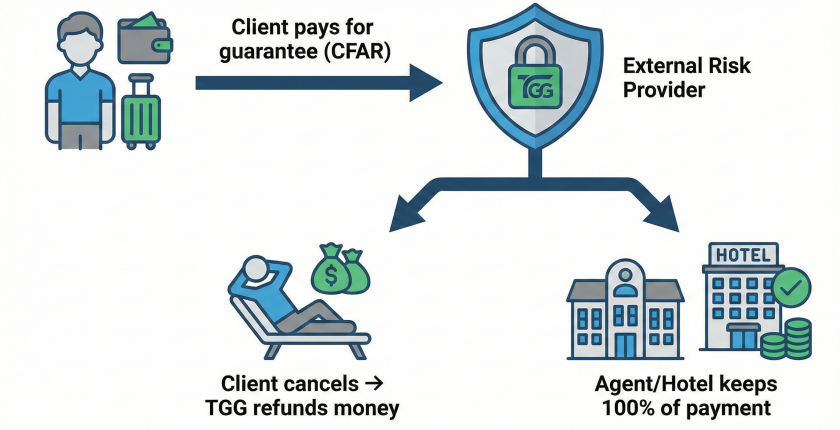
The new partnership between ECTAA and Trip Guaranty Group revolutionizes how the travel industry handles cancellation risk. By introducing an external "Cancel For Any Reason" guarantee, financial risk is outsourced completely. Clients get total peace of mind with guaranteed refunds, while travel agents and suppliers keep their earnings from non-refundable bookings. It’s the missing link that makes selling high-value Dynamic Packages safe and scalable for everyone involved.

Modern tourism has split in half. This fracture is more visible today than ever before. On one side, we have hermetic all-inclusive resorts, where the buzz of pool bars is meant to drown out the outside world, and local culture is admitted only for an evening dance show—safe and domesticated. On the other side stand destinations that have made cultural austerity or abstinence their shield, offering authenticity without anesthesia.
Somewhere in between, in this uncomfortable yet fascinating crevice, a new type of traveler is being born. They no longer want to just consume views. They want to understand. Meet the Conscious Explorer.

GlobNet Marketing
In today's fast-paced and constantly changing market, modern enterprises confront a variety of difficulties.
GlobNet Marketing
adress:
Aleja NMP 35 lokal 6
42-202 Czestochowa
Poland
Mob +48 501 272 121
NIP PL949 005 21 89