


Modern tourism has split in half. This fracture is more visible today than ever before. On one side, we have hermetic all-inclusive resorts, where the buzz of pool bars is meant to drown out the outside world, and local culture is admitted only for an evening dance show—safe and domesticated. On the other side stand destinations that have made cultural austerity or abstinence their shield, offering authenticity without anesthesia.
Somewhere in between, in this uncomfortable yet fascinating crevice, a new type of traveler is being born. They no longer want to just consume views. They want to understand. Meet the Conscious Explorer.
The Conscious Explorer: Traveling to Understand the World, Not Just Consume It
Modern tourism has fractured. On one side, we have hermetic resorts where umbrella drinks are meant to drown out the noise of the outside world. On the other, destinations that have made abstinence or cultural austerity their shield. Somewhere in between, in this uncomfortable crevice, a new protagonist is born. Let's call them the Conscious Explorer.
Tourism has always been a mirror of our desires. Today, however, that mirror shows the crack more clearly than ever. On the one hand, there are the all-inclusive enclaves—comfort zones walled off from reality, where local culture is admitted only for an evening dance show; safe and domesticated. On the other hand, there are countries that resist Western hedonism, offering instead something many find hard to swallow: authenticity without anesthesia.
In this landscape emerges a traveler who no longer wants just to look. They want to see.
Escape from the Golden Cage
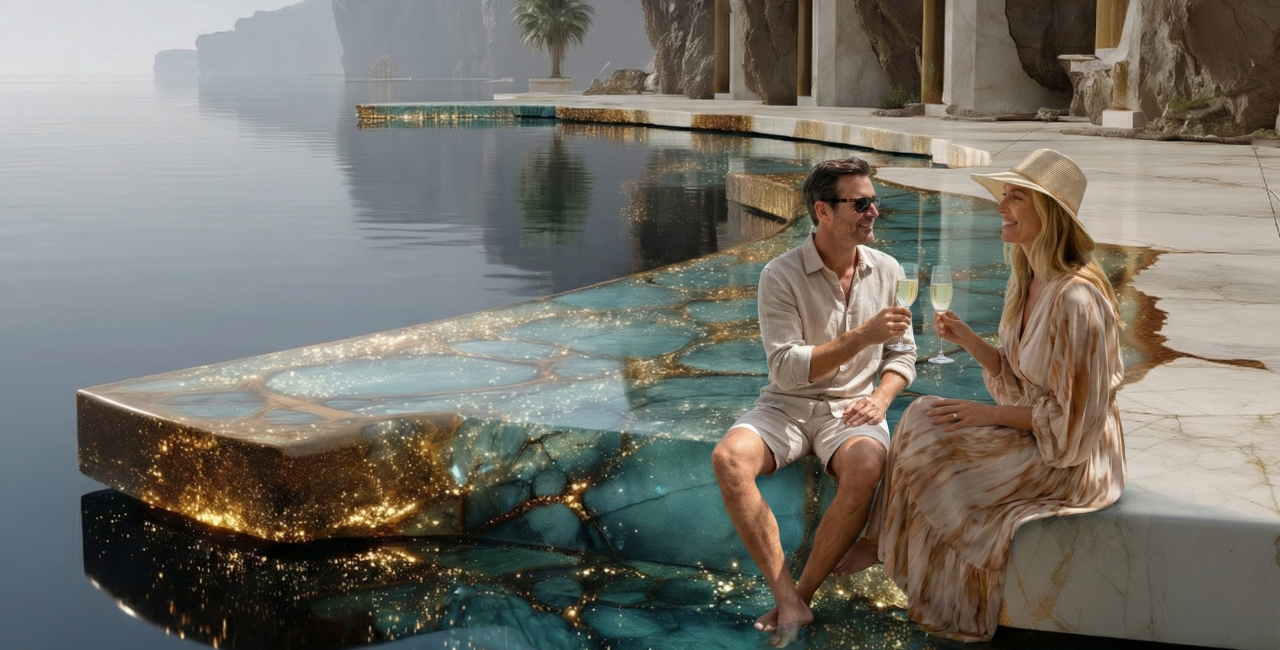
A resort is a promise of security. We pay so that nothing surprises us. So that the scrambled eggs taste the same as at home, and the air conditioning hums in a familiar rhythm. It’s a bundled transaction: we give money, they give us the illusion of paradise. But this illusion has its price, often hidden.
UN statistics are brutally sober in this regard, stripping us of illusions: in mass tourism in developing countries, out of every hundred dollars we leave at a travel agency, sometimes barely five remain in the local community. The rest? It flows back to us—to Western corporations, airlines, and hotel chains. This is called "tourism leakage." Locals are left cleaning rooms and serving as background for our photos.
The Conscious Explorer is someone who has felt the discomfort of this inequality. Someone who, looking at a marble lobby, started wondering what lies behind the wall.
Three Pillars of a New Sensibility
Our protagonist is neither an ascetic sleeping on the floor nor a hippie traveling on a shoestring. They often have resources, considerable ones. The difference lies in how they use them.
1. Money as a Tool for Change For the Explorer, luxury has redefined itself. It no longer means golden faucets, but access to people. Instead of an anonymous behemoth, they choose a boutique hotel run by a local family. They pay more, but they pay them. They understand their wallet is a voting card. Buying ceramics from an artisan, rather than a Chinese magnet at the airport, is a sign of respect for someone's work.
2. Curiosity Stronger than Comfort "Pillow tourism" bores them. The Explorer learns a few clumsy phrases in the local language not to impress, but to break the ice. They seek stories not found in guidebooks. They prefer one honest, perhaps even difficult, conversation with a resident over checking off ten "top attractions." It’s a readiness for plans to fall apart, for the bus to be late, but in return, life happens.
3. An Awareness That Matters This is perhaps the most important trait. The awareness that our presence changes the place we arrive in. The Explorer respects local taboos—covering shoulders, foregoing alcohol where it is frowned upon. They don’t treat this as an assault on their freedom, but as a lesson in humility. They understand they are a guest in someone else's home, not the master of the manor.
The Dilemma: Dominican Republic vs. Oman
When the Conscious Explorer stands before a map, they don't look for a place where "everything is included." They look for a place where everything has meaning. Let's look at this decision process:
The Offering | All-Inclusive Resort (e.g., Dominican Rep.) | Identity Destination (e.g., Oman) | The Explorer’s Inner Voice |
Sense of Luxury | Marble, unlimited buffet, swim-up bar. | The silence of the desert, sleeping in a tent, a starry sky. | "True luxury is space and being alone with the power of nature, not crowding at a bar." |
Alcohol | Available 24/7, often the goal of the trip itself. | Hard to find or prohibited. | "I’m not traveling to forget. I’m traveling to remember. Tea with a Bedouin gives me more than a third drink by the pool." |
Economy | Money flows out of the country in a wide stream. | Money goes into the hands of the host, driver, cook. | "I want something more to remain after my departure than a mountain of plastic cups." |
The Encounter | A folkloric, staged spectacle. | An invitation for dates, conversation about daily life. | "I am interested in life, not theater." |
Hunger for Authenticity in a World of Excess
Why are there more such people? Because we are tired. Tired of plastic, repetition, global unification where every high street looks the same. Trend reports—like the one from American Express—are clear: nearly 80% of us prefer to spend money on an experience rather than an object.
After the pandemic, in the shadow of the climate crisis, "checking off" another country seems hollow. We are looking for depth. We are looking for—and this is the key word—relationships.
The tourism industry faces a revolution. Travel agencies must understand that for a growing group of people, "luxury all-inclusive" sounds like a threat of boredom. The new tourist expects transparency and ethics. They want to know that their journey is not destroying what they came to admire.
A New Map
The Conscious Explorer draws the map of the world anew. Not by hotel stars, but by the intensity of experience. In a country where they won't drink wine, they see a chance for a sober look at another culture. In the lack of amenities, they see adventure.
Their motto could sound like this: "I travel not to move my comfortable world to a new place. I travel to let the new place change my world. And I pay for this privilege consciously—supporting those who open this world to me."
Because at the end of the road, it doesn't matter how many free drinks we drank, but how many times our hearts beat faster with delight, emotion, or understanding of another human being. And that is the only true luxury that cannot be faked.
Summary: Deeper, Not More
Straddling the gap between the convenience of a gated resort and the challenge of raw authenticity, a growing number of travelers are choosing the latter. The Conscious Explorer redefine the tourist map, proving that silence and space can be more exclusive than an unlimited buffet. This is a clear signal to the entire industry: the future does not belong to those who offer "more" for the same price, but to those who offer "deeper." Because today, the most valuable currency in travel is relationship, not transaction.
Related Articles


GlobNet Marketing
In today's fast-paced and constantly changing market, modern enterprises confront a variety of difficulties.
GlobNet Marketing
adress:
Aleja NMP 35 lokal 6
42-202 Czestochowa
Poland
Mob +48 501 272 121
NIP PL949 005 21 89