

Bridging the New Silk Road: Connecting Asian & Middle Eastern DMCs with Polish Tour Operators
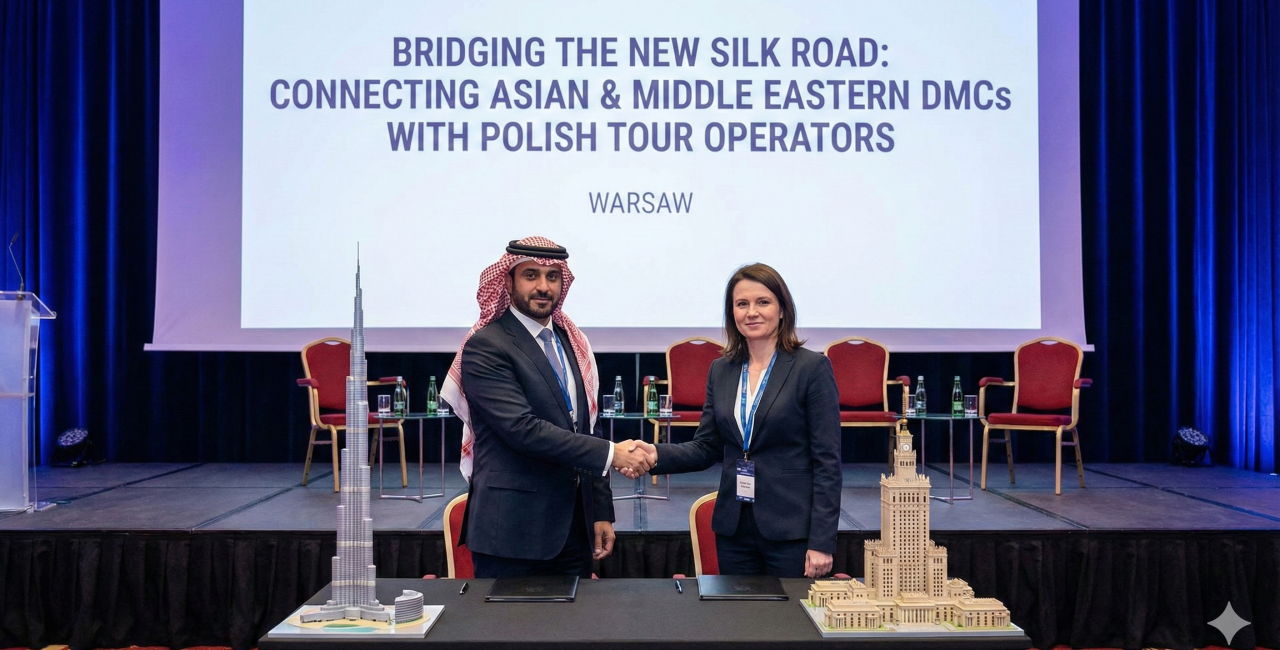
Polish tourists are increasingly looking further afield—to the East. Exotic destinations are no longer a niche luxury; they are becoming the standard for a middle class seeking unique experiences.
In this context, the role of Destination Management Companies (DMCs) from Asia and the Middle East is becoming pivotal. How can we effectively bridge these two worlds and build lasting business partnerships?
Bridging the New Silk Road: Connecting Asian & Middle Eastern DMCs with Polish Tour Operators
Why Poland? The New Tourism Tiger of Central Europe
For many Asian and Middle Eastern DMCs, Poland has historically been a secondary market. This is a mistake. Here is why fighting for the Polish client is worth the effort:
- Stable Economic Growth: The rising purchasing power of Poles translates into significantly higher holiday budgets.
- Excellent Air Connectivity: Direct flights from Warsaw (LOT Polish Airlines) to Beijing, Tokyo, Delhi, Dubai, and Riyadh, combined with a strong presence of Gulf carriers like Emirates, Qatar Airways, and Flydubai in regional Polish airports.
- A Hunger for Novelty: The Polish tourist is demanding and curious about the world. They seek authenticity, culinary experiences, and culture, not just an "all-inclusive" rest.
The Role of the DMC: More Than Just Logistics
Polish tour operators are masters of sales, but operationally they need strong local partners. Asia and the Middle East are regions that are culturally and logistically demanding.
Key Principle: A Polish organizer isn't just looking for a hotel booking intermediary (they can do that themselves). They are looking for an architect of experiences.
The value that local DMCs bring:
- Access to Unique Venues: Private temple visits, desert dinners away from the crowds, and workshops with local artisans.
- Crisis Management: In regions with different political or climatic dynamics, 24/7 support in the local language is invaluable.
- Linguistic Flexibility: While English is the standard, providing Polish-speaking guides (or those with impeccable English) often determines the success of an offer.
High-Potential Regions
1. The Middle East: Beyond Dubai
The UAE blazed the trail, but the Polish market is ready for more.
- Saudi Arabia: Opening up to tourism (Vision 2030) is generating immense interest. Polish operators are looking for partners to help decode this new, mysterious market.
- Oman and Jordan: Destinations perceived as safe, stable, and offering spectacular landscapes ("Emerald Waters" and Petra).
2. Southeast Asia & The Far East
- Vietnam and Thailand: Classics that need a refresh. DMCs must offer new routes, away from mass tourism.
- Japan and South Korea: Recent hits. Here, DMCs are essential due to language barriers and complex transport logistics (rail passes, reservations).
How to Build Effective B2B Relations
For the connection between a Polish tour operator and an exotic DMC to work, both sides must understand the specifics of each other's markets.
Challenge | Solution |
Trust | Personal meetings are key. Presence at trade fairs like ITB Berlin, WTM London, or the local TT Warsaw is mandatory. |
Payments & Finance | Transparency regarding deposits and payment terms. Polish operators value flexibility and clear cancellation policies. |
Response Speed | The Polish market moves fast. The response time to a Request for Quotation (RFQ) should not exceed 24 hours. |
Education | Organizing FAM Trips for Polish agents. Nothing sells a destination better than the seller's personal experience. |
Related Articles



GlobNet Marketing
In today's fast-paced and constantly changing market, modern enterprises confront a variety of difficulties.
GlobNet Marketing
adress:
Aleja NMP 35 lokal 6
42-202 Czestochowa
Poland
Mob +48 501 272 121
NIP PL949 005 21 89