

Who Holds the Keys to Your Tourism Kingdom? Why Relying on External Systems is a Strategic Risk
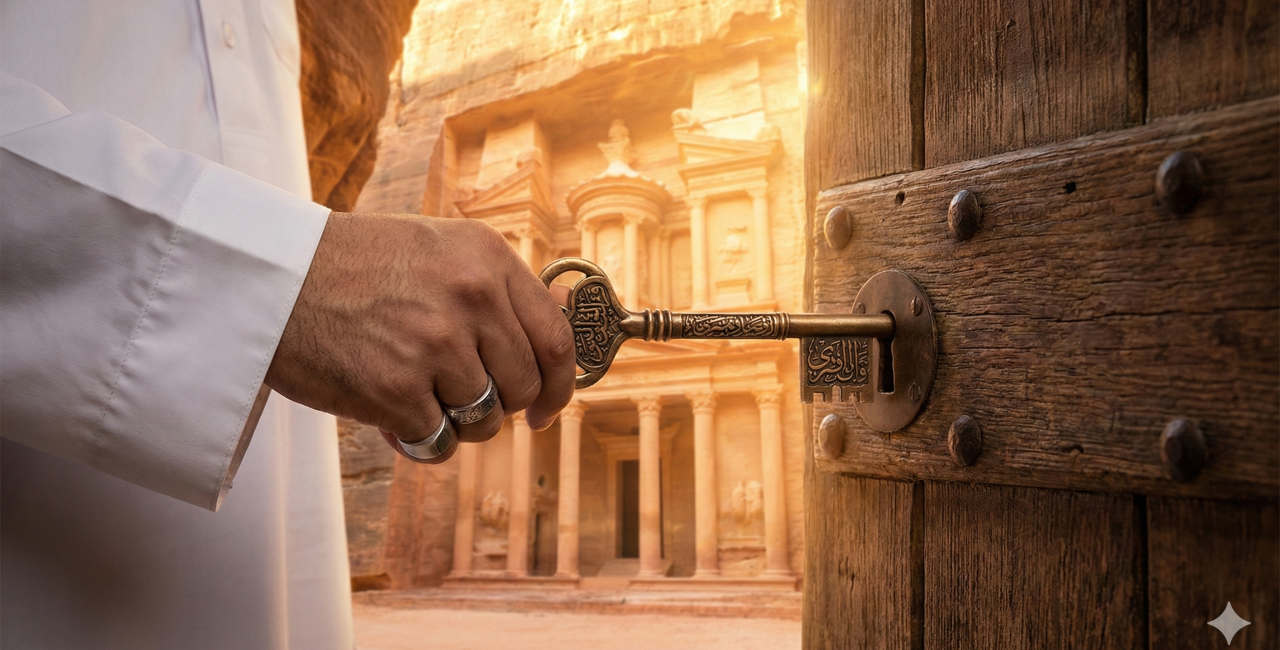
In a world dominated by a few global tech giants, can a nation truly retain control over its own tourism sector? This is not a theoretical question; it is a matter of economic security.
My recent trip to Turkey provided stark evidence of the dangers of relying solely on external, third-party booking platforms. A single court ruling or an algorithm change is all it takes to cut off local businesses from millions of potential customers instantly.
In this article, I examine the case study of the Booking.com blockade in Turkey and juxtapose it with the strategic vision of leaders in Jordan and Saudi Arabia. I demonstrate why the MENA region urgently needs its own independent distribution system—a "Gatekeeper"—and how institutional patronage has become the strongest currency in the eyes of European clients today.
When the App Says "No," but the Reception Says "Yes." How Institutional Authority Builds Trust in Europe.
My Lesson from Turkey: A Reality Check
A year ago, while traveling in Turkey, I learned a lesson that changed my perspective on tourism distribution. I wanted to extend my stay at a hotel. I pulled out my phone, opened a well-known global app, and saw the message: "No rooms available." Worried, I went down to the reception. The owner, hearing my problem, smiled broadly. "We have plenty of free rooms," he said. "The app isn't showing them to you. We are here, waiting for guests, but the system is blocking you."
Legal Background: TÜRSAB vs. The Giant
This wasn't a technical glitch. It was the result of a major legal battle. In Turkey, following a motion by TÜRSAB (Association of Turkish Travel Agencies), the court blocked Booking.com's operations within the domestic market. The reason? Protecting the local market from unfair competition. The giant was imposing draconian commissions on hotels and avoiding local taxes, putting Turkish agencies at a disadvantage. The court's verdict was clear: the market must be fair.
For the hotelier I spoke with, this situation was paradoxically a relief. He told me: "We prefer to sell directly or through partners who play fair. That way, the money and decisions stay with us."
Inspiration from Jordan: A Foundation of Trust
This story came back to me when I read the latest post by Ibrahim Al Nabali (Secretary of the JSTA in Jordan). He rightly emphasizes the necessity of working with licensed entities and eliminating the "grey market." This is the absolute foundation. But market quality is built not just by bans, but primarily by smart support.
A New Era: Equal Opportunities for Professionals
In the traditional sales model, it is often difficult for new, creative companies to break through. My goal in building Poland Market is different. I want to create an environment where success is determined by the quality of the offer, and every registered entity has an equal chance of reaching the client.
Here, the role of state institutions is key. Support from the Department of Tourism in Saudi Arabia for such a project has a strategic dimension. It is not about manually controlling the market, but about providing institutional patronage.
Why Does It Work?
- Prestige Builds Trust: For a client from Europe or Poland, a platform supported by the official Department of Tourism is a signal: "This is verified. This is safe. This is Premium." The authority of the institution itself drastically increases sales conversion.
- Equal Opportunities: The platform gives equal market access to both large DMCs and smaller, specialized attraction providers. It is often these smaller, local experts who are the biggest tourism magnets, offering unique, authentic experiences.
- Quality Algorithm: The mechanism is transparent – the winner is the one who provides the best offers. This motivates all registered suppliers to raise standards and creativity.
Quality Defends Itself
In this model, everyone wins. DMCs and hotels (large and small) gain a prestigious sales channel. The Department of Tourism achieves its promotional goals, showing the world the diversity and richness of the country. And the client from Europe receives a top-tier product, signed with a mark of quality.
Summary: Digital Sovereignty
Turkey showed me not only how technology can mislead but, above all, how risky it is to hand over the keys to your market to foreign hands. Relying solely on external platforms is a strategic error. A single political or legal change in the world is enough to block sales for an entire country.
That is why we are building Poland Market as an independent "highway" connecting our markets. If a region invests in its own dedicated system, it gains independence. It is your system, which will operate stably and continuously, regardless of global turbulence. It is a guarantee that the doors for tourists will always be wide open – on your terms.
Related Articles



GlobNet Marketing
In today's fast-paced and constantly changing market, modern enterprises confront a variety of difficulties.
GlobNet Marketing
adress:
Aleja NMP 35 lokal 6
42-202 Czestochowa
Poland
Mob +48 501 272 121
NIP PL949 005 21 89